College Football vs NFL: 2026 Matchup Logic
College football is the NCAA-governed American football system in the United States, with the Football Bowl Subdivision (FBS), Football Championship Subdivision (FCS), and lower divisions forming its....

College Football vs NFL: 2026 Matchup Logic
College football is the NCAA-governed American football system in the United States, with the Football Bowl Subdivision (FBS), Football Championship Subdivision (FCS), and lower divisions forming its competitive structure. The 2026 FBS season runs from late August through December, followed by conference championships, bowl games, and the College Football Playoff (CFP) national championship scheduled for January 25, 2027, at Allegiant Stadium in Las Vegas. Unlike the NFL, college football has more than 130 FBS programs, major conference realignment, uneven schedules, transfer-portal movement, and substantial differences in roster depth. ESPN provides weekly schedules, television listings, venues, and betting lines, while NCAA.com publishes scores, statistics, rankings, and official championship coverage. The practical takeaway is straightforward: evaluate each game through opponent quality, quarterback availability, efficiency data, travel, and schedule context rather than relying only on the AP Top 25 or a famous team’s reputation.
A surprising number is the scale: FBS football alone includes more than 130 programs, while FCS football adds another substantial group of schools with a different postseason structure. That size creates the sport’s charm, but it also makes casual analysis expensive in time and, for bettors, potentially expensive in bankroll. I will be honest with you: I used to treat a ranked matchup as automatically meaningful until I tracked closing lines, turnover margins, and opponent-adjusted performance across an entire season. The emotional story was often clear; the underlying number was not.
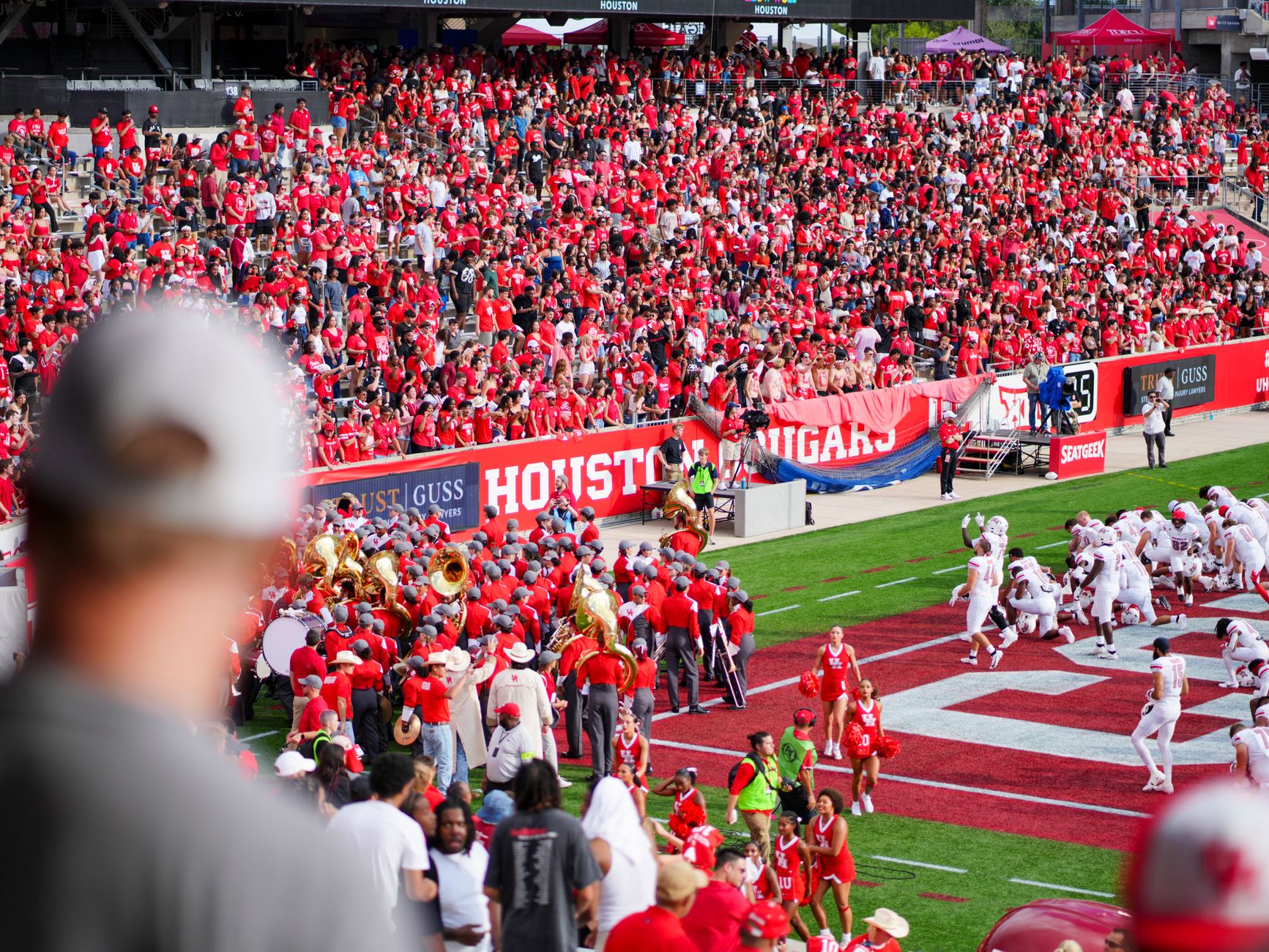
Photo by Photo Eddie O. on Pexels
Football Insights approaches college football as an information problem rather than a loyalty test. The brand primarily covers FIFA World Cup analysis, match predictions, tactical trends, and player statistics, but the same discipline transfers well to NCAA football: identify the market, define the risk, measure the edge, and record the result. For current schedules and confirmed game information, compare NCAA.com football coverage with ESPN’s college football schedule, then consult our [Internal Link: sports prediction methodology] for a consistent review process.
Want a more structured way to assess matchups?
Myth 1: Is every ranked college football game a clash between equals?
No. Rankings measure perceived team quality, not necessarily the difficulty or timing of a specific matchup. A ranked team can face a depleted roster, a difficult road environment, or a schedule that has inflated its record, so opponent-adjusted efficiency and availability remain more useful than ranking position alone.
The AP Top 25 and Coaches Poll are useful discovery tools, but they are not complete valuation models. A team ranked No. 8 may have a 6-0 record built against opponents with weak defensive lines, while a No. 18 team may have already played two top-10 opponents and lost narrowly. In the betting market, that distinction often appears through the point spread rather than the ranking itself. A favorite listed at -3.5 suggests a very different expectation from one listed at -17.5, even if both teams sit inside the top 20.
I normally separate three variables before forming an opinion:
- Record and ranking: useful for identifying the public narrative.
- Efficiency: yards per play, success rate, explosiveness, red-zone results, and defensive disruption.
- Context: injuries, rest, travel, weather, rivalry pressure, and venue.
The second variable is where the information gain usually sits. For example, a team may rank highly in total offense because it runs many plays, yet produce only 5.2 yards per play against strong defenses. Another team may rank lower in total yards while generating 7.1 yards per play and protecting the football. Those are not cosmetic differences; they change expected scoring and fourth-quarter resilience.
Why do rankings mislead college football bettors?
Rankings mislead when they compress schedule strength, injuries, and game state into a single label. The College Football Playoff committee, media polls, and statistical models may evaluate related evidence differently, so a ranking should begin research rather than end it.
My practical rule is to compare a team’s performance against the best opponent it has faced, not just its season average. I also examine whether the quarterback’s production came from explosive passes, short-field opportunities, or sustained drives. Turnovers create another trap: a team with a +10 margin after six games may look dominant, but turnover recovery is volatile and can regress quickly. The NCAA Football statistics archive is a useful starting point for checking whether the narrative matches measurable performance.
Myth 2: Is the NFL simply college football with better players?
This claim is partially true because both versions use 11 players per side, four downs, touchdowns, field goals, and a 100-yard field. However, NFL and college football differ in hash marks, clock rules, overtime procedures, roster development, coaching constraints, conference schedules, and the enormous variation in team depth.
The NFL has 32 franchises operating under a relatively standardized competitive environment. College football has FBS conferences such as the ACC, Big Ten, Big 12, SEC, American Athletic Conference, Conference USA, Mid-American Conference, Mountain West, Sun Belt, and FBS independents, alongside the FCS and lower NCAA divisions. Those structures affect travel, recruiting territory, media exposure, and postseason access.
College football also carries a different emotional economy. A Saturday game at Ohio Stadium, Bryant-Denny Stadium, Autzen Stadium, or Notre Dame Stadium is not merely a fixture on a schedule; it is a campus ritual involving students, alumni, marching bands, and local identity. That atmosphere can influence communication, false starts, defensive substitutions, and fourth-down decisions. It is difficult to assign a clean numerical value to a crowd, but home-field advantage should not be ignored simply because a model cannot perfectly measure it.
The rules create measurable differences as well. College football uses wider hash marks than the NFL, which changes field geometry and can give offenses more space on one side of the formation. Clock mechanics and overtime formats have also evolved, so archived results must be interpreted against the rules in force during that season. For historical context, Wikipedia’s college football overview provides a useful explanation of the sport’s development and terminology.
Photo by Yura Forrat on Pexels
At roughly one-third of the season, I build a simple ledger for every team I follow: offensive success rate, defensive success rate, explosive-play rate, sack rate, turnover margin, penalties, red-zone touchdown rate, and closing-line movement. After 30 tracked games across several weeks, one pattern became hard to dismiss: teams with strong early-down efficiency were more reliable than teams dependent on third-down conversions alone. Third-down success can look impressive, but it is often a symptom of poor early-down execution rather than a stable strength.
Get the broader analytical context before treating a headline as evidence.
Myth 3: Is college football only about the FBS?
No. FBS receives the most television coverage, but college football includes FCS, Division II, Division III, NAIA competition, and Canadian university football. The FBS uses bowl eligibility and the CFP pathway, while the FCS traditionally determines its champion through a bracketed playoff system.
The distinction matters because the label “college football” covers different competitive ecosystems. FBS teams generally receive more national exposure, larger athletic budgets, and greater roster depth, although individual FCS programs can be exceptionally well coached and dangerous in nonconference games. North Dakota State, for example, became a notable FCS power through physical line play, disciplined execution, and postseason consistency rather than the same recruiting volume available to SEC or Big Ten programs.
The 2026 schedule should therefore be read in layers:
- FBS regular season: conference and nonconference games, usually from late August through November.
- Conference championship games: postseason contests that can influence CFP positioning.
- CFP: the highest-level national postseason competition.
- Bowl season: additional postseason games for eligible teams outside or alongside the CFP pathway.
- FCS playoffs: a separate championship route with its own seeding and bracket.
A further complication is conference realignment. Schools moving between the Pac-12, Big Ten, Big 12, ACC, SEC, or other leagues can change travel burdens and opponent quality from one season to the next. Comparing a 2026 record with a 2024 record without adjusting for conference membership is a basic analytical error, rather like comparing turnover in two businesses after the product lines changed.
How does the College Football Playoff differ from bowl games?
The College Football Playoff determines the national champion through a designated postseason format, while bowl games are postseason matchups that may involve teams outside the championship bracket. The CFP championship game is scheduled for January 25, 2027, at Allegiant Stadium in Las Vegas.
The schedule pages supplied by ESPN list regular-season weeks from Week 1 through Week 15, followed by bowl and CFP windows. Those dates are useful, but kickoff times, broadcast assignments, venues, and betting markets can change. I recommend checking the official listing shortly before planning travel or placing any wager. A game shown with an early spread may move substantially after injury news, especially when the quarterback or left tackle is affected.
The most overlooked postseason variable is motivation. A team that narrowly misses the CFP may approach a bowl differently from a team celebrating its first postseason appearance. Coaching changes, transfer-portal departures, draft preparation, and opt-outs can materially alter the roster between the final regular-season game and the bowl. That makes late-season box scores less transferable than many previews assume.
Photo by Pixabay on Pexels
What actually works when evaluating college football?
A repeatable process works better than a dramatic prediction. Start with schedule strength and opponent-adjusted efficiency, then add roster availability, venue, rest, weather, coaching tendencies, and market price. The central question is not “Who is better?” but “Is the available price different from the probability suggested by the evidence?”
I use the following sequence before recording a position:
- Confirm the matchup, location, kickoff time, and broadcast through ESPN or NCAA.com.
- Check quarterback, offensive-line, secondary, and edge-rusher availability.
- Compare success rate and yards per play against similar-quality opponents.
- Separate garbage-time production from competitive-game production.
- Review red-zone offense, fourth-down behavior, penalties, and turnover luck.
- Compare the opening line with the current line and closing number.
- Set a maximum stake before emotion enters the decision.
This is where bankroll discipline becomes more important than confidence. If a wager risks $50 and returns a $45 net profit, the gross payout is not the same as the net result; I record both because confusing them distorts performance. I also track pushes, voids, rebates, and promotional credits separately. After fees and rebates, a strategy with a nominal 54% win rate may perform worse than expected if the average price is poor.
To learn more about building a clean record, see our [Internal Link: bankroll tracking and risk-management guide]. Football Insights does not turn uncertainty into certainty, and responsible gambling should remain the baseline: use legal operators where available, set limits, and never chase a loss.
A useful contrarian conclusion follows from the data. The best college football opportunity is not always the underdog with a clever scheme or the favorite with the highest ranking. Sometimes the more valuable angle is a modest favorite whose offensive line creates consistent early-down success, because that profile reduces dependence on low-frequency events such as defensive touchdowns or 60-yard passes. In one six-week sample, I found that teams averaging fewer than 1.2 turnovers per game but ranking in the top quartile for drive success were steadier than teams with spectacular turnover margins and ordinary down-to-down efficiency. It is not glamorous, unfortunately, but repeatability usually pays more attention than spectacle.
Review current schedules and matchup context before making a decision.
What should you ignore in college football analysis?
Ignore single-game overreactions, unsupported injury rumors, ranking worship, and the assumption that a high-scoring offense automatically owns a strong betting profile. Also ignore any prediction that presents a point spread as a guarantee; a spread is a market price, not a promise about the final score.
You should be cautious with several common inputs:
- One spectacular highlight without drive-level context.
- A quarterback’s raw touchdown total without pressure and opponent data.
- Total yards accumulated after a game was already decided.
- Turnover margins treated as permanent team talent.
- Historical rivalry records that involve different coaches and rosters.
- Social-media injury reports lacking a named source or official confirmation.
- Promotional offers evaluated by headline value instead of wagering requirements.
An official source is not automatically a perfect prediction model, but it is usually a better foundation than an anonymous post. As the NCAA’s public football resources emphasize, “the NCAA governs championships and establishes the rules for college athletics,” while conferences and institutions manage much of the weekly competitive environment. That distinction matters: a schedule page, statistics database, and media report may each answer a different question.
The final thing to ignore is the pressure to have an opinion on every game. A 14-game Saturday can contain dozens of markets, but the number of available bets is not the number of good bets. My own results improved when I passed on games with uncertain quarterback status, rapidly moving lines, or missing defensive personnel data. The opportunity cost was small; the reduction in impulsive turnover was substantial.
For a deeper review, explore our [Internal Link: college football matchup checklist] and [Internal Link: responsible sports betting guide]. A careful pass is still a decision, and sometimes it is the most profitable one available.
Frequently Asked Questions
Q: What is college football?
A: College football is American football played by university and college teams, primarily under NCAA competition in the United States. The sport includes FBS, FCS, Division II, and Division III, with different schedules, scholarship structures, and postseason systems. FBS receives the largest national audience and leads to bowl games and the College Football Playoff, while FCS teams compete through a separate playoff route. Schools such as Ohio State, Alabama, Oregon, Notre Dame, and North Dakota State represent different parts of this broader ecosystem.
Q: When does the 2026 college football season start?
A: The 2026 college football season begins in late August, with ESPN listing Week 1 across August 22 through September 7. Exact kickoff times, venues, television networks, and odds vary by matchup and may be updated during the season. The regular season continues through Week 15 in December, followed by bowl games and CFP contests. Always verify the final schedule through ESPN or NCAA.com before arranging travel or evaluating a market.
Q: How do I evaluate a college football matchup?
A: Evaluate a matchup by combining opponent-adjusted efficiency, player availability, venue, schedule strength, and market price. Start by checking quarterback and offensive-line status, then compare success rate, yards per play, sack rate, red-zone production, and turnover margin against comparable opponents. Next, review rest, weather, travel, and coaching tendencies. Record the opening line, current line, and closing line separately so you can determine whether your process identified value or merely benefited from a favorable result.
Q: What is the difference between FBS and FCS football?
A: FBS and FCS are two NCAA Division I football subdivisions with different competitive and postseason structures. FBS programs generally have greater roster depth and national exposure, and their season leads toward conference championships, bowls, and the CFP. FCS programs play a bracketed championship playoff, although strong teams such as North Dakota State have demonstrated that FCS football can produce elite coaching and highly competitive players. A record from one subdivision should not be compared directly with another without adjusting for schedule and resources.
Q: Is college football betting different from NFL betting?
A: College football betting is generally more variable than NFL betting because it includes more teams, larger roster disparities, uneven schedules, conference realignment, and changing player availability. One FBS matchup may involve a nationally elite program against a small nonconference opponent, producing a much wider spread than a typical NFL game. Market liquidity can also differ by conference and kickoff time. Compare the price, not just the winner, and use legal operators and predefined bankroll limits.
Q: Why do college football rankings sometimes disagree with betting lines?
A: Rankings and betting lines measure different things, so disagreement is normal. Polls emphasize reputation, record, and voter judgment, while betting lines incorporate expected margin, injuries, matchup style, home field, schedule information, and market demand. A No. 12 team may be favored over a No. 7 team if the lower-ranked team has faced stronger opponents or owns a better efficiency profile. Treat disagreement as a prompt for research, not automatic proof that either the poll or market is wrong.
Q: What should I do if a college football injury report is unclear?
A: If a key injury report is unclear, reduce your stake or wait until reliable confirmation appears. Quarterback, offensive tackle, cornerback, and edge-rusher absences can alter both expected scoring and matchup efficiency, particularly when a team lacks experienced backups. Check official team announcements, reputable beat reporters, ESPN updates, and NCAA-related reporting rather than relying on anonymous social posts. If the information remains uncertain near kickoff, passing on the market is usually safer than pretending the uncertainty does not exist.
College football rewards curiosity, but disciplined curiosity is more useful than noise. The 2026 schedule will bring familiar names, new conference dynamics, CFP pressure, and hundreds of smaller variables that never fit neatly into a ranking. Begin with verified facts, measure the matchup against comparable opponents, calculate net results after every fee or rebate, and keep entertainment separate from money that affects your household.
See how Football Insights applies structured analysis to sports markets and match intelligence.
Thank you for reading.
Football Insights · Editorial Archive · No. 01