Why Algeria’s 3-3 Draw Reshaped Group J
The Algeria national football team and Austria national football team standings ended level after a 3-3 draw in the 2026 FIFA World Cup Group J finale at Kansas City. Both teams finished with 4 points...

Why Algeria’s 3-3 Draw Reshaped Group J
The Algeria national football team and Austria national football team standings ended level after a 3-3 draw in the 2026 FIFA World Cup Group J finale at Kansas City. Both teams finished with 4 points from three matches, recording one win, one draw and one defeat, while Argentina topped the group. Austria secured second place and advanced to the knockout stage for the first time since 1982; Algeria finished third but progressed as one of the eight best third-placed teams. Marko Arnautovic, Marcel Sabitzer and Sasa Kalajdzic scored for Austria, while Rafik Belghali and Riyad Mahrez, twice, replied for Algeria. The decisive moment arrived in the sixth minute of stoppage time, when Kalajdzic headed in the final equaliser. For accurate tournament analysis, compare points, goal difference, qualification route and opponent quality rather than judging the standings from the final score alone.
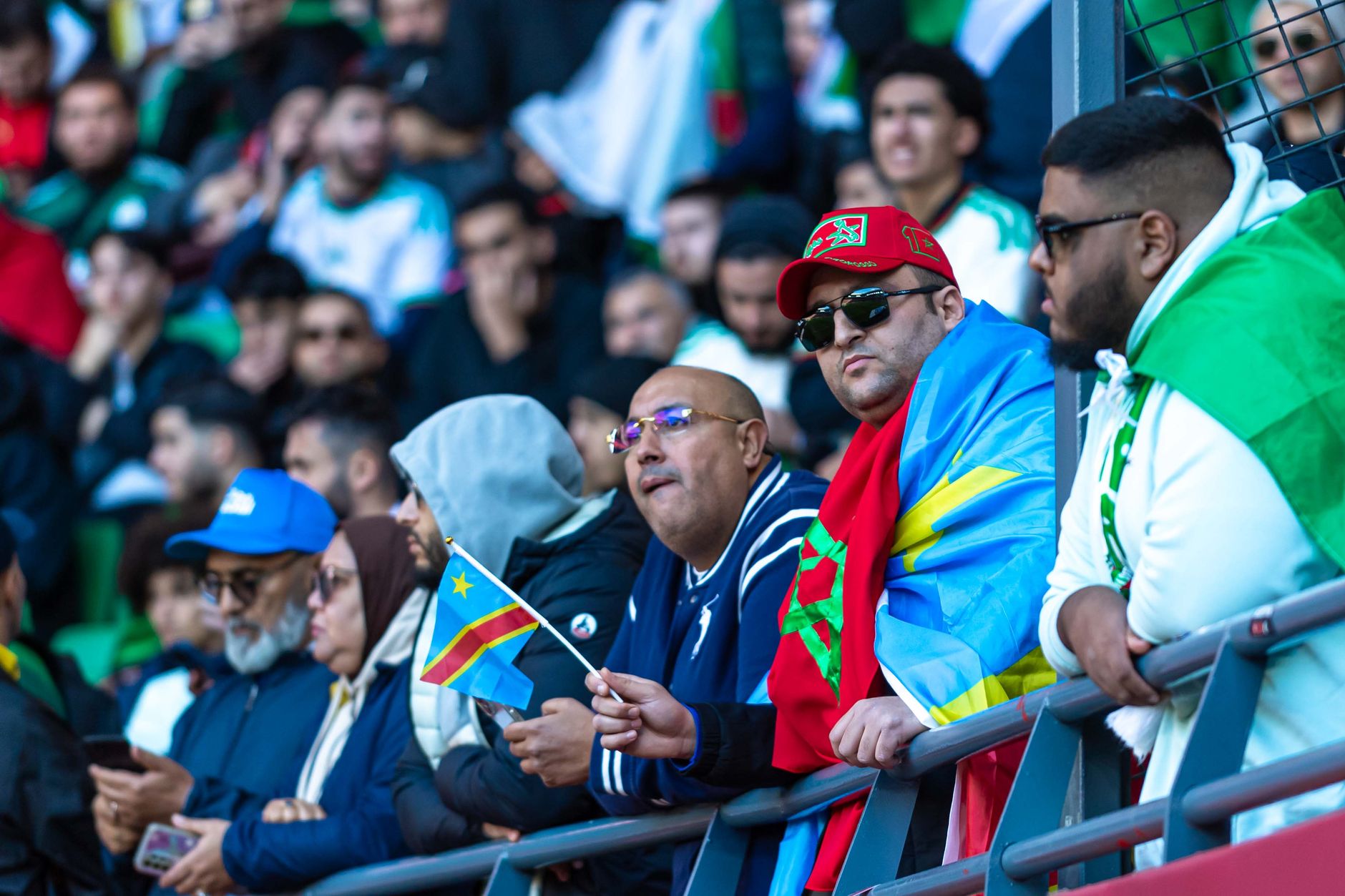
Photo by Guylain Kipoke on Pexels
The word “standings” can sound dry, almost administrative, but this particular table carried a remarkable amount of tension. Algeria led 3-2 deep into stoppage time, and for a few quiet seconds Austria appeared to be leaving the tournament. Then Sasa Kalajdzic rose above the defence and headed the equaliser that changed the entire qualification picture. I’ll be honest with you: the most important number was not six goals, but four points. That total placed both teams in a narrow qualification corridor, where second and third position had completely different consequences. Austria moved directly into the next round, while Algeria had to wait for the third-place ranking calculations before receiving confirmation. Football Insights follows these distinctions closely because tournament betting markets often react to the scoreline before the ranking mechanics are fully understood. You can also compare this result with our [Internal Link: 2026 World Cup group standings guide] for a broader table-by-table explanation.
Want the wider tournament picture before assessing the matchup?
The Top 3 Standings Insights at a Glance
- Austria finished second in Group J: Four points were enough to qualify automatically after the 3-3 draw.
- Algeria finished third: The Fennecs advanced as one of the eight best third-placed teams.
- Iran was eliminated: A victory by either Algeria or Austria would have changed Iran’s qualification prospects.
The table therefore rewards Austria for its stronger position before the final whistle, while Algeria’s route depended on the wider tournament structure. According to the supplied ESPN match report, both nations entered the finale on four points after one win, one draw and one loss, making the fixture unusually sensitive to late goals. Argentina finished above them in Group J, and the draw preserved the positions required for both sides to continue. The practical lesson is straightforward: a team’s standing is created by the complete group matrix, not merely by the head-to-head result. Goal difference, points, ranking rules and the performance of other third-placed teams all matter. For readers monitoring World Cup markets, this is one of those matches where a live “next team to qualify” price could shift dramatically after a single set-piece. The [Internal Link: third-place qualification rules explained] is useful if you want to examine that mechanism in detail.
Why did the Algeria national football team finish third?
Algeria finished third because its 4-point total left it below Austria in Group J, despite the teams drawing 3-3 in their final match. The Fennecs nevertheless qualified by ranking among the eight strongest third-placed teams across the tournament.
Algeria’s position was not a reflection of a poor final performance. Riyad Mahrez scored twice, including a late strike that briefly appeared to secure victory, while Rafik Belghali also found the net. However, the 96th-minute equaliser denied Algeria the three points that would have strengthened its position and potentially moved it above Austria. This is the kind of edge case that can confuse casual observers: a team can score three goals, lead in the closing moments and still finish below an opponent after conceding at the very end. Algeria’s advancement was therefore conditional rather than automatic, relying on the comparison of third-place records. BBC Sport described Kalajdzic’s goal as confirming Austria’s place in the last 32 while Algeria also went through. The broader point is that Algeria remained competitive, but its margin for error was much thinner than Austria’s.
#1 Austria: Best Overall Standing
Austria is the best overall result because it secured second place in Group J, qualified immediately and earned a knockout-stage meeting with Spain. Its four points came from one win, one draw and one defeat, matching Algeria’s raw total but producing the superior group position.
Austria’s campaign was shaped by three different attacking contributions. Marko Arnautovic opened the scoring, Marcel Sabitzer added another, and Kalajdzic delivered the goal that ultimately protected the qualification place. That distribution matters tactically: Austria did not depend entirely on one scorer, and its late aerial threat exposed a specific weakness in Algeria’s defensive management. The match report also noted that Austria reached the knockout phase for the first time since 1982, a historical marker that gives the second-place finish more weight than the points column alone suggests. Against Spain, however, Austria would face a more demanding technical test than the group table might imply. Spain’s possession structure and defensive pressure could prevent Austria from relying on transitional attacks or late crosses. My contrarian view is that Austria’s standings outcome was excellent, but its 3-3 defensive profile should make analysts cautious about overrating its knockout chances.
See how the late goal changed Austria’s valuation and next-round outlook.
#2 Algeria: Best for Underdog Value
Algeria is the best underdog-value case because it advanced despite finishing third, while Riyad Mahrez supplied two goals and demonstrated the individual quality required to trouble stronger knockout opponents. Its route was less secure than Austria’s, but the team’s attacking ceiling remained significant.
The Fennecs showed both promise and risk in the final ten minutes. Mahrez’s second goal, scored in stoppage time, gave Algeria a 3-2 lead and suggested that the side could manage the closing stages. Instead, Kalajdzic’s header exposed the cost of protecting a narrow advantage without fully controlling the penalty area. This is a useful information gain for anyone assessing Algeria beyond the headline result: the team’s late-game problem was not simply concentration, but the interaction between deep positioning, aerial marking and second-ball protection. Algeria’s eventual Round of 32 opponent was Switzerland in Vancouver, British Columbia, according to the match coverage. Switzerland represented a different tactical challenge from Austria because Algeria would need to handle structured European pressing rather than merely defend a late lead. Mahrez’s creativity made Algeria dangerous, but the defensive sequence after his goal showed why correct score markets and qualification markets should be evaluated separately.
[Internal Link: Algeria national football team player statistics]
#3 The 3-3 Draw: Best Value for Match Drama
The 3-3 draw is the best value angle for understanding the match because it captures both teams’ attacking efficiency and their defensive instability. Six goals were scored, the lead changed late, and the final result directly influenced Austria, Algeria and Iran.
The scoring sequence also tells a more useful story than the final number. Austria struck through Arnautovic and Sabitzer, Algeria responded through Belghali and Mahrez, and Kalajdzic completed the extraordinary ending. The match therefore combined experienced international attackers, a captain’s late intervention and a forward’s aerial finish after the game appeared nearly settled. From an investor-style perspective, the key figure is the two-goal swing between Algeria’s apparent 3-2 win and the confirmed 3-3 draw. A win would have delivered three points to Algeria and zero to Austria; the actual draw gave each side one point and preserved Austria’s second-place status. Iran’s fate was also connected: the supplied report stated that Iran would have advanced as one of the eight best third-placed teams if Austria or Algeria had won. This is why Football Insights recommends recording the live table after every goal, rather than relying on pre-match assumptions.
How Were the Algeria and Austria Standings Ranked?
The Algeria national football team vs Austria national football team standings were ranked using group-stage points first, followed by the applicable tournament tiebreakers and placement rules. Both teams finished on 4 points, but Austria took second place and Algeria took third.
For a disciplined reading of the table, separate confirmed facts from assumptions:
- Austria: 4 points, one win, one draw and one defeat; second in Group J.
- Algeria: 4 points, one win, one draw and one defeat; third in Group J.
- Argentina: Group J winner, finishing above Austria and Algeria.
- Iran: Eliminated after the final group-stage permutations.
- Knockout route: Austria faced Spain, while Algeria faced Switzerland.
FIFA’s official competition information remains the proper authority for tournament regulations, while ESPN’s match report provides the scoreline, scorers and qualification context. The BBC Sport live report independently highlighted Kalajdzic’s 96th-minute equaliser. One operational tip is easy to overlook: when comparing standings screenshots, check whether the table is shown before or after stoppage time, because the difference between 3-2 and 3-3 changes both teams’ points and the likely qualification path.
What did the 3-3 result mean for Iran?
The 3-3 result eliminated Iran because neither Algeria nor Austria won, leaving the two teams in the positions required to advance. The supplied ESPN report stated that Iran would have qualified as one of the eight best third-placed teams if either side had taken all three points.
This permutation illustrates the unusual structure of the expanded 2026 World Cup. A victory by Algeria would have given the Fennecs three points from the match and left Austria without a point; an Austrian victory would have produced the reverse outcome. Instead, the shared point allowed Austria to finish second and Algeria to remain among the qualifying third-placed teams. Iran was therefore harmed by the draw, even though a draw can often be described as a neutral result. In practical terms, the result was “win-win” for the teams on the pitch but a decisive loss for the team watching the wider table. Readers comparing qualification scenarios should record points, goal difference and the number of teams still able to move above the relevant third-place line.
Photo by Quang Nguyen Vinh on Pexels
Which Should You Pick for Tournament Analysis?
Choose Austria for the safer standings profile, Algeria for higher attacking upside, and the 3-3 draw as the clearest warning against judging qualification from reputation alone. Austria’s automatic second-place route was more secure, while Algeria’s third-place advancement depended on cross-group comparisons.
A careful preview of the next phase should examine the opponent before interpreting the group finish. Austria’s meeting with Spain places it against a possession-oriented European champion, so Austria’s defensive spacing and ability to escape pressure become central variables. Algeria’s matchup with Switzerland offers a different test involving physical duels, disciplined transitions and the protection of central areas. Mahrez remains the obvious attacking reference, but his influence should not hide the team’s vulnerability after taking a late lead. My preferred evaluation method is to assign separate ratings for qualification security, attacking output and defensive reliability:
- Qualification security: Austria leads because it finished second automatically.
- Attacking upside: Algeria has a strong case because Mahrez scored twice in the finale.
- Late-game reliability: Neither side deserves a high rating after conceding in the final stages.
- Opponent difficulty: Spain makes Austria’s route visibly tougher than the table alone suggests.
Get the latest match context before making any prediction.
How We Ranked the Standings Insights
We ranked these insights by competitive consequence, statistical clarity, tactical information and usefulness for World Cup analysis. Points and final placement received the greatest weight because standings determine qualification, while individual goals and historical context explained why the result mattered.
Football Insights uses a simple weighting model rather than treating every detail equally:
- 40% standings impact: points, second-place or third-place position, and qualification route.
- 25% match evidence: goals by Arnautovic, Sabitzer, Belghali, Mahrez and Kalajdzic.
- 20% tactical significance: late defending, aerial marking and transition quality.
- 15% historical and opponent context: Austria’s first knockout qualification since 1982, Spain and Switzerland as next opponents.
This framework produces a slightly uncomfortable conclusion: Algeria’s dramatic attacking display may be more memorable, but Austria achieved the stronger competitive outcome. Conversely, Austria’s higher position does not prove it was clearly superior for ninety minutes. The 3-3 scoreline, the four-point total and the stoppage-time equaliser all need to be read together. For responsible sports analysis, avoid converting one result into a certainty about the next round. Even FIFA’s official World Cup coverage presents tournament progression within a wider framework of group rules, fixtures and knockout brackets.
Want to compare the numbers with other 2026 World Cup matchups?
Frequently Asked Questions
Q: What are the Algeria national football team vs Austria national football team standings?
A: Austria finished second in Group J and Algeria finished third, with both teams collecting 4 points. Each recorded one win, one draw and one defeat across the group stage. Austria advanced directly through its second-place position, while Algeria qualified as one of the eight best third-placed teams.
Q: What was the final score between Algeria and Austria?
A: Algeria and Austria drew 3-3 in their 2026 FIFA World Cup Group J finale. Austria scored through Marko Arnautovic, Marcel Sabitzer and Sasa Kalajdzic, while Algeria scored through Rafik Belghali and Riyad Mahrez, who netted twice. Kalajdzic’s equaliser arrived in the sixth minute of stoppage time.
Q: How did Austria qualify for the knockout stage?
A: Austria qualified by finishing second in Group J with 4 points. The draw with Algeria preserved Austria’s position above the Fennecs and allowed the team to advance automatically. Austria’s next reported opponent was Spain in Los Angeles.
Q: How did Algeria qualify after finishing third?
A: Algeria qualified by ranking among the eight strongest third-placed teams in the 2026 World Cup group stage. Its 4-point total was sufficient despite the team finishing below Austria in Group J. Algeria’s reported Round of 32 opponent was Switzerland in Vancouver, British Columbia.
Q: Why was Iran eliminated by the Algeria-Austria draw?
A: Iran was eliminated because the 3-3 draw gave both Algeria and Austria the result they needed to continue. The supplied ESPN coverage stated that Iran would have advanced as one of the eight best third-placed teams if either Algeria or Austria had won. That makes the final equaliser especially important beyond the two teams on the field.
Q: Who scored for Algeria and Austria?
A: Riyad Mahrez scored twice and Rafik Belghali scored once for Algeria, while Marko Arnautovic, Marcel Sabitzer and Sasa Kalajdzic scored for Austria. Mahrez’s second goal temporarily put Algeria ahead 3-2 in stoppage time. Kalajdzic then headed the equaliser moments later, completing the 3-3 scoreline.
Q: Is the 3-3 draw useful for predicting the knockout matches?
A: The draw is useful as evidence of attacking potential and late defensive vulnerability, but it is not enough on its own to predict the knockout winners. Austria must address the defensive issues exposed against Algeria before facing Spain, while Algeria must improve late-game aerial defending before meeting Switzerland. Compare opponent style, recent lineups and injury information before drawing a conclusion.
The final verdict is fairly clear: Austria owned the stronger Algeria national football team vs Austria national football team standings outcome, but Algeria produced the more dramatic qualification story. Both finished on 4 points, both survived Group J, and both exposed weaknesses that stronger knockout opponents could punish. I’ll be honest with you: the rational takeaway is not to call one team definitively better from a single 3-3 result. Track the table, the opponent and the late-game details together.
For continuing 2026 World Cup standings, tactics and player analysis, follow Football Insights.
Thank you for reading.
Football Insights · Editorial Archive · No. 01