2026 World Cup: 5 Essential Insights
The 2026 FIFA World Cup will feature 48 national teams across Canada, Mexico, and the United States, with 104 matches scheduled from June 11 to July 19, FIFA has expanded the tournament from 32 teams,...
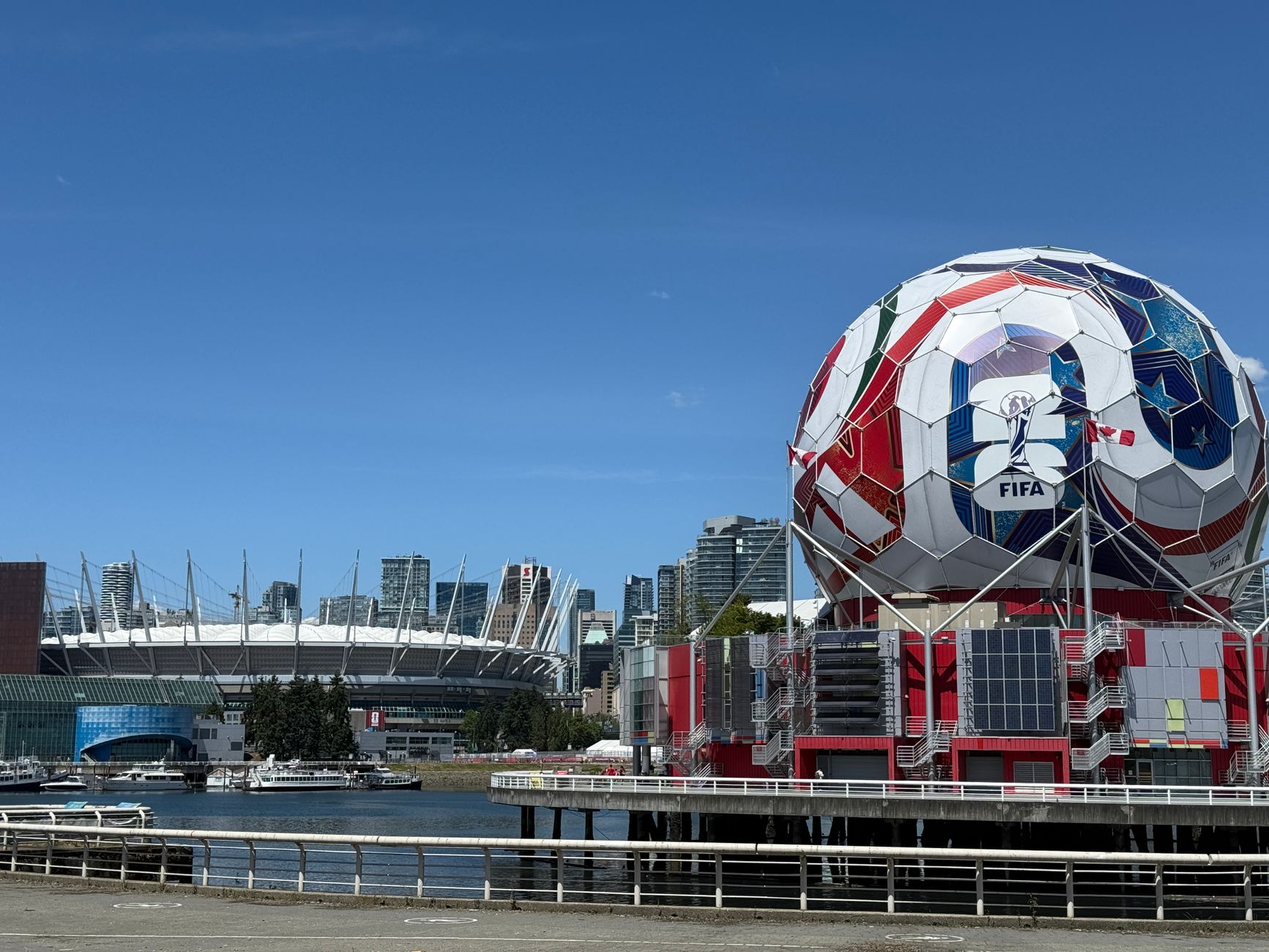
2026 World Cup: 5 Essential Insights
The 2026 FIFA World Cup will feature 48 national teams across Canada, Mexico, and the United States, with 104 matches scheduled from June 11 to July 19, 2026. FIFA has expanded the tournament from 32 teams, creating a new group-stage structure in which teams will be divided into 12 groups of four, followed by a Round of 32. The opening match is planned for Mexico City, while the final is scheduled for MetLife Stadium in East Rutherford, New Jersey. Football Insights follows the competition through match predictions, team tactics, player statistics, squad news, and tournament coverage for fans and bettors worldwide. The most practical takeaway is to study the official schedule, venue conditions, and confirmed line-ups together rather than relying on team reputation alone.
Step 1: Confirm the 2026 World Cup format
The 2026 World Cup format uses 48 teams, 12 groups of four, and 104 total matches, with the top two teams from each group plus the eight best third-place teams advancing to the Round of 32. This structure gives more nations access to the knockout phase but also creates a longer tournament and more complex qualification calculations.
The decision to expand the FIFA World Cup was approved by the FIFA Council in 2017, when the competition’s field was increased from 32 teams. According to FIFA’s official tournament information, the 2026 edition will be jointly hosted by Canada, Mexico, and the United States, making it the first men’s World Cup staged across three countries.
For practical analysis, the group table needs to be read differently from previous tournaments. A team may qualify with fewer points than expected if several groups produce strong third-place finishers, while goal difference and goals scored may become important tie-breakers. The likely tournament rhythm is also unusual: 104 matches mean more data, more rotation, and more opportunities for tactical changes.
A simple tracking sheet should include:
- Group position and points.
- Goal difference and goals scored.
- Third-place ranking across all groups.
- Travel distance between fixtures.
- Rest days before each match.
At Football Insights, I would treat these variables as a single model rather than making a prediction from FIFA rankings alone. If you are comparing teams, please remember that statistical confidence is not the same as certainty, particularly during a tournament with an unfamiliar format.
Want a clearer starting point for the tournament structure?
Photo by The Six on Pexels
Step 2: How should you read the World Cup schedule?
The 2026 World Cup schedule should be read through four filters: date, venue, time zone, and recovery period. The tournament begins on June 11, 2026, and concludes on July 19, 2026, but the effect of a fixture depends heavily on where it is played and how far the teams must travel before the next round.
The host countries provide three very different football environments. Mexico offers altitude and heat considerations in cities such as Mexico City and Guadalajara, Canada introduces longer northern travel patterns through Toronto and Vancouver, and the United States provides a large network of venues stretching across multiple time zones. The final venue, MetLife Stadium in East Rutherford, New Jersey, is in the New York metropolitan area, while the opening match is scheduled for Mexico City.
This creates an operational issue that many basic World Cup previews overlook: the same kickoff time can feel very different to a squad arriving from another continent. A European team playing in the western United States may face a biological-clock adjustment that does not appear in a normal league fixture. Conversely, a team with a stable base and shorter travel route may gain a small but measurable preparation advantage.
When checking a schedule, I recommend recording:
- The local kickoff time and the team’s previous match location.
- The number of full recovery days.
- The next destination and estimated travel burden.
- Climate, altitude, and playing-surface conditions.
- Whether the match is a decisive final group fixture.
For exact dates and match listings, consult the ESPN FIFA World Cup schedule and verify later changes through FIFA. You can also use our [Internal Link: World Cup fixture tracking guide] when building a personal calendar.
Step 3: Which team data matters before kickoff?
The most useful team data before a 2026 World Cup match includes expected goals, shot quality, defensive pressure, set-piece performance, goalkeeper distribution, and confirmed player availability. These indicators are more informative than possession percentage by itself because they explain how a team creates and prevents meaningful chances.
A high-possession side may still be vulnerable if its attacks end in low-value shots from outside the penalty area. Likewise, a team with less than 45% possession can be dangerous if it wins the ball in advanced areas and attacks the space behind full-backs. Football Insights compares recent competitive matches with opposition strength, because raw numbers from friendlies can distort a team’s apparent form.
Player availability deserves a separate column in any serious analysis. A missing centre-back can change the defensive line, while the absence of a holding midfielder may affect pressing resistance and transition protection. It is also important to distinguish between a player being named in the squad, being available for selection, and being fit enough to complete 90 minutes.
A useful pre-match checklist is:
- Compare the last five competitive matches, not only the latest result.
- Separate home, neutral-site, and away performance.
- Check set-piece goals for and against.
- Review injuries, suspensions, and expected minutes.
- Identify whether the team changes shape after conceding.
- Compare the starting XI with the coach’s preferred system.
One information gain is easy to miss: a team’s third-choice set-piece taker can matter more than its headline striker when knockout matches are tight. In a tournament with 104 games, dead-ball situations may decide qualification margins that casual previews attribute only to finishing quality.
For deeper statistical context, see the World Football Elo Ratings and the FIFA/Coca-Cola Men’s World Ranking. These are useful reference points, but neither should be treated as a complete prediction engine.
Ready to compare tactics rather than just names?
Step 4: What changes when you assess betting value?
World Cup betting value changes when market price, probability, and tournament context are considered together. A strong team can be the most likely winner while still offering poor value if bookmakers have already priced in its reputation, recent results, and star players.
I want to be careful here, because this is where emotional decisions become expensive. Before considering any market, calculate an estimated probability and compare it with the implied probability in the odds. Decimal odds of 2.00 imply 50% before accounting for margin; odds of 1.50 imply approximately 66.7%. The calculation is simple, but the estimate behind it is not.
A responsible process should include:
- Setting a fixed entertainment budget before the tournament.
- Recording stake, odds, implied probability, result, and closing price.
- Separating prediction accuracy from financial return.
- Avoiding accumulators built only around famous teams.
- Stopping when decisions become reactive or emotionally uncomfortable.
The contrarian point is that tournament outrights are often less flexible than match markets. A team can remain capable of winning the World Cup but lose value after a favourable draw attracts heavy public support. In contrast, a match-specific angle may improve when confirmed line-ups reveal rotation, tactical changes, or travel fatigue.
Football Insights can provide predictions and tactical interpretation, but no preview removes uncertainty. Gambling should be legal in your location, age-restricted, and treated as entertainment rather than income. For further reading, explore our [Internal Link: responsible football betting guide] and [Internal Link: match prediction methodology].
Step 5: verification
Verification means checking every important detail against current, authoritative information before acting on a World Cup prediction. Confirm the fixture, venue, kickoff time, squad status, suspension list, weather report, and starting line-up, because any one of these can materially change the analysis.
The official tournament schedule may be updated for operational reasons, and media reports can repeat old information after a change. The safest order is to check FIFA.com, the relevant national federation, the competition’s official match centre, and a reputable schedule provider such as ESPN. FIFA’s public tournament material describes the competition as “the world’s greatest single-sport event,” but that broad description does not replace match-level verification.
My final verification routine takes roughly 10 minutes:
- Confirm the fixture and venue through FIFA.
- Check team announcements and training reports.
- Review the latest injury and suspension information.
- Compare at least two reliable weather sources.
- Recalculate implied probability from the current odds.
- Record the decision before kickoff, including the reason.
This last step matters more than it sounds. If you only remember winning predictions, your personal record becomes unreliable. A spreadsheet showing turnover, stake, return, rebate if applicable, and net position gives a more honest picture than a collection of memorable wins.
See the details before the next major fixture:
Troubleshooting common failures
The most common World Cup analysis failures are outdated schedules, overreliance on rankings, ignored travel effects, incomplete injury information, and poor record-keeping. These problems are usually process errors rather than failures of football knowledge, so they can be reduced with a repeatable checklist.
If a prediction appears inconsistent with the market, first check whether the data refers to a different venue, an old line-up, or a previous competition. If a team’s recent record looks excellent, inspect the strength of its opponents and whether the wins came through late goals or sustained chance creation. If a model favours a team with a long travel route, adjust for recovery and do not assume that league-level performance transfers perfectly to a transcontinental tournament.
Another practical edge case involves time zones. A match displayed as June 15 in one location can appear as June 16 for viewers elsewhere, particularly for late kickoffs in North America. I recommend saving fixtures in both local venue time and your own time zone, then checking the official match centre on match day.
Use this troubleshooting table:
- Wrong match time: verify the venue’s local time through FIFA.
- Unexpected team weakness: check travel, altitude, injuries, and rotation.
- Conflicting player news: prioritize federation and club announcements.
- Poor betting results: calculate net return, not winning percentage alone.
- Repeated impulse decisions: impose a cooling-off period and fixed limits.
- Model disagreement: compare assumptions before changing the forecast.
The U.S. Soccer Federation, Canada Soccer, and Federación Mexicana de Fútbol Asociación may also provide country-specific squad and venue information. These sources are particularly useful when an international team’s availability news develops faster than general sports coverage.
Frequently Asked Questions
Q: What is the 2026 World Cup?
A: The 2026 World Cup is FIFA’s men’s international tournament featuring 48 teams across Canada, Mexico, and the United States. It will run from June 11 to July 19, 2026, and include 104 matches. The competition expands from the previous 32-team format, with 12 groups of four and a Round of 32 after the group stage.
Q: How many teams qualify for the 2026 World Cup?
A: Forty-eight teams qualify for the 2026 World Cup. The allocation includes six automatic places for the hosts—Canada, Mexico, and the United States collectively receive three host places, while the remaining places are distributed through FIFA’s confederations and the intercontinental playoff route. Always check FIFA’s final qualification announcements because allocation and playoff details are competition-specific.
Q: How does the 2026 World Cup group stage work?
A: The group stage contains 12 groups of four teams, and 32 teams advance to the knockout phase. The top two teams in every group qualify, along with the eight best third-place teams. Points, goal difference, goals scored, and official tie-break procedures can determine advancement, so a team should not assume that four points will always be enough.
Q: How can I analyse a 2026 World Cup match?
A: Analyse recent competitive form, expected goals, opposition quality, injuries, tactical shape, travel, rest days, and confirmed line-ups. Compare at least five relevant matches instead of relying on one result, then check the venue and kickoff time through FIFA or ESPN. Football Insights combines these factors with team tactics and player statistics, but every forecast remains probabilistic.
Q: What is the difference between World Cup rankings and match predictions?
A: FIFA rankings measure longer-term international performance, while match predictions estimate the probability of a specific fixture. Rankings can help establish a baseline, but they do not fully account for venue, injuries, tactical matchups, weather, or travel. A practical prediction should use rankings as one input among several rather than as a final answer.
Q: How much does it cost to follow 2026 World Cup analysis?
A: Basic tournament information, official schedules, and many Football Insights updates can be accessed online without paying a betting stake. Costs may include internet access, subscriptions to selected sports services, travel, tickets, or any optional gambling activity. If you bet, set a fixed budget in advance and never treat a prediction as a guaranteed return.
Q: What should I do if a World Cup fixture or player detail looks wrong?
A: Check FIFA’s official match centre first, then compare the relevant national federation, club announcement, and a reputable schedule provider. Fixture times may appear on different calendar dates because of time zones, while injury reports can change before line-ups are confirmed. Do not act on an unverified social-media post, and update your notes before making any decision.
Track the 2026 World Cup with patience, verified information, and a clear separation between probability and emotion. The tournament’s 48-team field, 104-match schedule, three host nations, and wide travel geography create more analytical variables than previous editions, which is precisely why disciplined preparation matters. Football Insights will continue covering predictions, tactics, player statistics, and tournament developments, but the most reliable habit remains simple: verify the facts, record the numbers, and protect your budget.
Interested in following the tournament with structured match insights?
Thank you for reading.
Football Insights · Editorial Archive · No. 01